
Maruti's compact segment comprising New WagonR, Swift, Celerio, Ignis, Baleno, Dzire, and utility vehicles, including Gypsy, Ertiga, XL6, S-Cross and Vitara Brezza saw robust sales, while the mini segment comprising Alto, S-Presso and Old WagonR saw negative growth.

Toyota Kirloskar Motor is expecting a 58 per cent jump in revenues and a 3.6 per cent rise in sales for the current fiscal.

The measures government takes next to push economic growth will be the key for automotive sector

Toyota, General Motors, Volkswagen, Ford, Honda, Renault, Hyundai, Suzuki and Nissan are among those who boast of production of a million unit or more every year.

Recently, South Korean Foreign Minister, Chung Eui-yong, dialled his Indian counterpart, S Jaishankar, in New Delhi. His government, he said, "regretted the offence caused to the people of India". A day earlier, India had summoned the South Korean ambassador to express its "strong displeasure" over "an unacceptable social media post".

Firms are enthused at passenger vehicle numbers but high interest rates a problem.

'Two would be premium products and three would be mainstream products.'
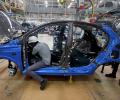
While sales of compact cars, including models such as Swift, Celerio, Ignis, Baleno and Dzire declined, sales of utility vehicles, including Vitara Brezza, S-Cross and Ertiga, increased 26.3 per cent to 19,177 units as compared to 15,178 in the year-ago month.

The recently launched Toyota Camry looks good, drives well, offers ridiculous levels of space and comes quite feature-loaded.

The auto industry has had a mixed month. The build up to Dhanteras and Diwali was good but the demand tapered off subsequently.

Cumulative sales of India's top passenger vehicle makers -- Maruti Suzuki, Mahindra and Mahindra, Tata Motors, Honda Cars, and Toyota Kirloskar -- increased to 206,418 units in February over 200,322 units in the same month last year, an increase of 3 per cent.

The 2015 Toyota Fortuner is just a minor update.

Toyota launched the Fortuner brand in the Indian market back in 2009 which went on to become an instant hit.

The country's largest carmaker Maruti Suzuki India (MSI) on Monday reported a 11.8 per cent increase in wholesales to 164,469 units in February. The company had sold 147,110 units in February last year, Maruti Suzuki India (MSI) said in a statement. Domestic sales increased 11.8 per cent to 1,52,983 units last month, as against 1,36,849 units in February 2020, it added.

Workers' union to hold meeting on Monday to decide when to return to work.

Ahead of the international auto show that begins next Wednesday, the Indian auto industry continues to be buffeted with bad news. According to data released by leading automobile companies on Saturday, the industry's sales volumes in January fell about five per cent from those in the same month last year.

One of the smallest players in India's car market, it is banking on new-look Etios to make inroads into the personal vehicle segment

In the two-wheeler segment, Bajaj Auto reported 31 per cent jump in total sales at 357,883 units in February against 273,513 units in the same month last year.

The curious case is of Honda, which has moved up the pecking order while actually losing market share!

RIL is also more profitable than Tata Motors.
December car sales data was a mixed bag. While some reported growth in sales other saw a dip. This probably can be because customers are waiting for a rate cut from RBI.

With entry-level cars being preferred amid the pandemic, market leader Maruti Suzuki has strengthened its hold, along with Hyundai Motor India.

Car sales likely to touch record 3-mn mark by the end of March.

Tata Motors, Mahindra & Mahindra and Kia India on the other hand witnessed an increase in their market share based on the retail sales last fiscal. As per the Federation of Automobile Dealers Associations (FADA), the retail sales of country's largest carmaker Maruti Suzuki India rose to 14,79,221 units in 2022-23 fiscal, attaining a market share of 40.86 per cent. It had retailed 12,39,688 units in 2021-22 and grabbed a market share of 42.13 per cent.
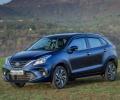
The Glanza is clearly a rebadged Maruti Suzuki Baleno, however, Toyota has given it a longer warranty and a lower starting price to make it more attractive. Are there other compelling reasons to consider it over Baleno?

Maruti's Alto retained the top position in June with 14,856 units, as against 15,750 units in June last year.

Maruti Suzuki, riding on the success of models like Swift, Estillo and Dzire, posted a growth of 3.4 per cent over the same period in the previous fiscal.

Japanese auto major Toyota will hike prices of its vehicles across all models in India by up to 3 per cent from January to offset rising input costs.

They have features such as bluetooth audio with remote, rear parking sensors and two-tone interiors.

Maruti's sales of the compact segment comprising Swift, Estilo, Ritz, Dzire and Baleno went up by 9.9% to 45,579 units

Toyota has set up two manufacturing plants at Bidadi, about 35 km from here, with a combined capacity of 310,000 units a year.

Toyota Fortuner 2016 vs Ford Endeavour vs Chevrolet TrailBlazer InteriorsToyota Fortuner 2017 interior

The company says if the ban on diesel vehicles continues, around 13% of its sales will be hit.

Dealers have stocked up vehicles in the run-up to a price hike, which is expected to be announced by leading players some time this month.

Amid better semiconductor chip supplies, the Indian automotive industry posted an 8 percent growth in production of vehicles across categories for the month of May, with three-wheelers (20 per cent) and passenger vehicles (16 per cent) leading the pack. Exports, however, dipped 21 per cent at an industry level. The industry also recorded its highest-ever May wholesales of domestic passenger vehicles (334,802 units), riding on high demand for sport utility vehicles (SUVs) and better supplies of semiconductor chips.

After the easing of lockdown in mid-May, auto companies were able to resume production in a phased manner, but the ramp-up was slow due to a broken supply chain, and lockdown-induced restrictions.

Recently, Suzuki Motor Corp (SMC) in an investor presentation expressed strong intent to enter the electric vehicle (EV) space. This is part of a larger strategy the Hamamatsu-based firm has drawn up in developing electrification of technologies as it seeks to achieve carbon neutrality. The significance of this presentation is that it marked the first time that the Japanese carmaker spelt out its EV strategy with well-defined timelines. SMC plans to develop electrification technologies by 2025, fully implement them in products from the same year, and make a full-scale quantitative increase from 2030.

Maruti Suzuki posted a marginal increase in January and the likes of Hyundai, Ford and Mahindra & Mahindra reporting a single-digit growth.

Maruti recorded 20 per cent jump in sales during November.

Automobile makers in India are embracing taxi-hailing apps such as Uber and Ola, hoping to ride on their expansion to sell more cars, a contrarian view to companies in Western markets that fear a drop in car sales due to them
 © 2026 Rediff.com - Advertise with us - Disclaimer - Privacy Policy - Sitemap - Feedback - About us - Terms of use - Grievances